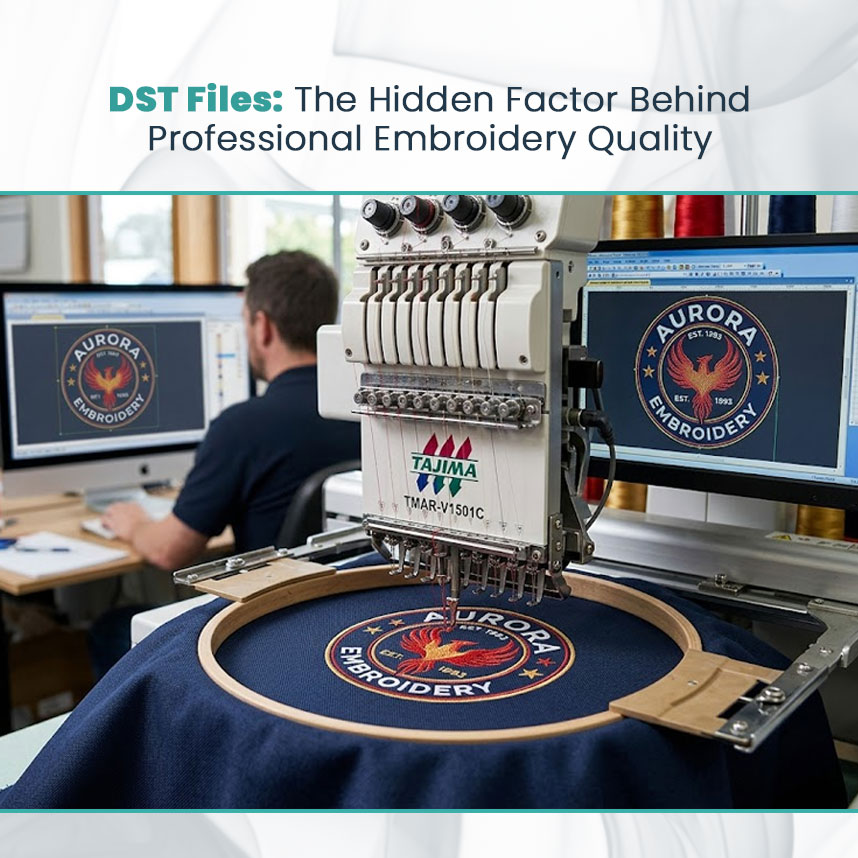
Have you ever received a perfect design but stitched poorly on fabric? In many cases, the issue isn't the machine, it's the file behind the design. That's why experienced embroiderers pay close attention to file preparation before production ever begins.
One format that continues to dominate commercial embroidery is dst files for embroidery . These files contain the stitch instructions needed for embroidery machines to recreate a design accurately. While the format itself is simple, its role in professional embroidery production is much bigger than many beginners realize.
Advanced embroidery projects require careful planning of stitch paths, densities, underlay, and compensation settings. A well-prepared DST file helps ensure that all of these elements work together correctly once the machine starts stitching. Without proper file preparation, even a great-looking logo can lose detail during production.
Why DST Files Matter in Professional Embroidery?
- They provide stitch instructions that embroidery machines can easily read.
- They are compatible with many commercial embroidery machine brands.
- They help maintain consistency across multiple production runs.
- They simplify file sharing between digitizers and embroidery shops.
This is where custom embroidery digitizing becomes important. A skilled digitizer doesn't simply convert artwork into stitches. They analyze the fabric, design complexity, stitch sequence, and final application before exporting the file. These adjustments directly affect how the design performs during embroidery.
Even as embroidery technology continues to improve, DST files remain a key part of commercial production. Their simplicity, reliability, and machine compatibility make them one of the most valuable tools in modern embroidery workflows.